
Caps with integrated filters represent a sophisticated category of closures that combine sealing functionality with filtration capability. These specialized closures are essential for applications requiring sterile venting, particulate removal, or contamination prevention—from pharmaceutical liquid dispensers to industrial fluid containers. At Shuanghao, we have developed comprehensive mold solutions for these precision closures, addressing the unique challenges of filter membrane integration, sealing integrity, and manufacturing consistency.
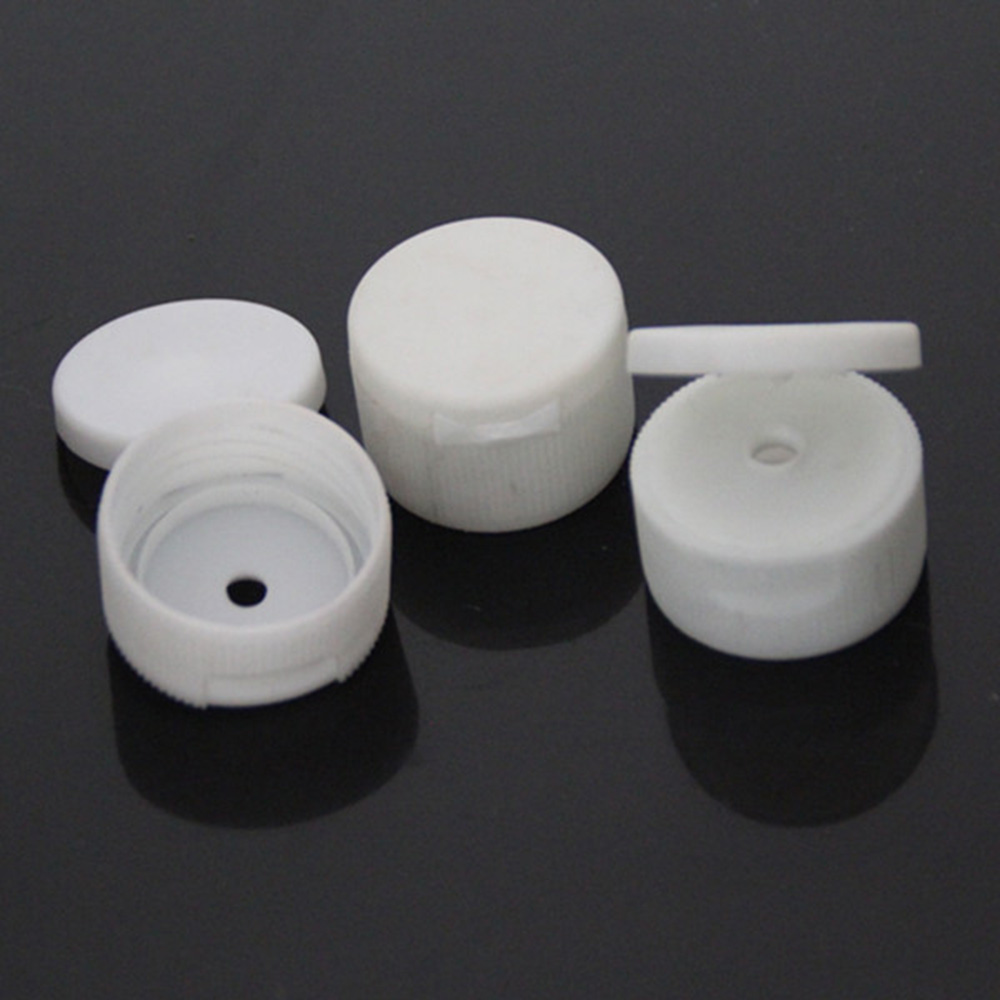
Integrated filter caps incorporate a filter membrane directly into the cap structure. The filter allows air or liquid to pass through while blocking contaminants, bacteria, or particulates. These closures are critical in applications where product purity and sterility are paramount, such as pharmaceutical liquid dispensers, sterile packaging, and sensitive chemical containers .
The cap design must securely retain the filter membrane while maintaining sealing integrity with the container. This is typically achieved through a two-part body construction that creates a receiving space for the filter membrane between the cap main body and a ring-shaped part-body .
The most critical decision in filter cap design is how the filter membrane is secured. Shuanghao supports multiple integration methods tailored to application requirements:
Overmolding (Insert Molding): The filter membrane is placed in the mold, and the cap body is injection molded around it. The perimeter edge of the membrane becomes "embedded" or incorporated into the plastic material, forming a single piece that cannot separate accidentally . This method creates a particularly strong connection and effectively prevents bacteria from passing between the membrane and the cap body .
Two-Part Assembly: The cap main body is molded first, the filter membrane is placed on the end face, and then the second ring-shaped part-body is molded onto it. During this process, part of the membrane surface is kept free of plastic, while the intended covered portions form an inside join that prevents contamination ingress .
Press-Fit Assembly: The filter is inserted into a receiving space formed by two part-bodies, secured by resiliently deflectable claw-like elements or a press fit connection .
For caps with integrated filters, the receiving space that holds the filter membrane must be precisely engineered. The two part-bodies comprise surfaces that point to one another, between which the filter membrane is arranged and supported on both sides . These surfaces preferably form a circumferential chamber that is open on one side, into which the edge region of the membrane is inserted .
Support Structure: An inside structure (grid-shaped, spoke-like, or other configuration) can be provided to support the filter membrane during injection molding and prevent it from being pressed inadvertently into the cap during use .
Resilient Elements: Resiliently deflectable portions can be provided on one of the part-bodies. These portions are deflected and tensioned by the inserted filter membrane during production, pushing the membrane against the second part-body and securing its position .
The filter membrane must be sealed around its perimeter to prevent bypass. When the second part-body is injection molded onto the first, an inside join between the second part-body and the membrane is formed, effectively preventing bacteria or other contaminants from passing through .
Specialized mold design features are required for caps with integrated filters:
The mold must create two part-bodies that precisely mate together to form the receiving space for the filter membrane. The surfaces that point to one another on the two part-bodies must be precisely machined to ensure proper fit and sealing .
When using overmolding to integrate the filter, the mold must precisely position the filter membrane and inject plastic around its perimeter edge without damaging the membrane or covering its functional area . This requires precise membrane handling and positioning systems.
The support structure for the filter membrane—whether grid-shaped, spoke-like, or claw-like elements—is molded as part of the cap body. These elements must be precisely formed to support the membrane without blocking its filtration function .
Delicate filter features require careful ejection. Sleeve ejectors are preferred to distribute force evenly. Ejector pins must be placed to avoid contacting the filter area.
Shuanghao's filter caps are typically produced from plastics such as polypropylene (PP) or polyethylene (PE) . The cap material must be compatible with both the filter membrane and the product being dispensed or contained. Material selection also affects the moldability of fine features and the durability of the filter retention elements.
Shuanghao ensures the performance and reliability of every filter cap through comprehensive quality control, including dimensional verification of part-bodies and receiving space, filter retention testing to confirm secure membrane placement, seal integrity testing to prevent bypass, and functional testing for filtration performance.
Caps with integrated filters combine sealing and filtration in a single, efficient closure. At Shuanghao, we have developed specialized mold solutions that address the unique challenges of these closures—from precise membrane integration and receiving space engineering to robust part-body construction and rigorous quality control.
Whether you need sterile venting caps for pharmaceutical liquid dispensers, particulate filter caps for industrial fluids, or custom filtration closures for specialized applications, Shuanghao has the engineering expertise to deliver reliable, high-performance molds.
Choose Shuanghao. Choose precision filtration solutions.