
As the global population ages, the demand for packaging that is accessible to older adults has become increasingly urgent. By 2050, the number of people aged 60 and older is expected to reach 2.1 billion, representing a significant demographic shift that packaging designers cannot ignore. For the pharmaceutical and consumer goods industries, this means designing closures that balance critical child-resistance with the ability for seniors to open them easily.
Research shows that between the ages of 65 and 75, people lose approximately 50% of their manual strength and dexterity . This decline, combined with conditions like arthritis, makes traditional child-resistant closures a significant barrier to medication adherence and product access. Many seniors either struggle with or deliberately disable child-resistant features out of frustration, creating safety concerns .
The U.S. Consumer Product Safety Commission has established specific protocols to ensure child-resistant packaging is also accessible to older adults. For packaging to be considered "senior-friendly," at least 90% of adults aged 50-70 must be able to open the closure within 5 minutes . This standard, formalized through protocol tests that evaluate packaging with senior adult populations aged 60-75, creates a clear benchmark for closure designers .
The single most important factor in making caps accessible to seniors is improving grip. Research on consumer preferences found that "consumers overwhelmingly preferred caps with coarse ribbing," with the primary reason being ease of opening—bigger ridges fitting better in the hand . This finding aligns with Shuanghao's design approach, which incorporates larger, more pronounced gripping features to accommodate reduced manual strength.
For push-and-turn child-resistant caps, the external configuration of the package is equally important as the internal mechanism. Adding ramps or prominent reliefs around the cap perimeter creates gripping points that provide mechanical advantage for opening, reducing the force required . Similarly, providing gripping features on the bottle body, such as recessed portions with ramps, allows users to grip the bottle and twist it away from the cap—a more ergonomic motion for seniors .
Patent designs for senior-friendly closures incorporate lugs extending outward from the cap periphery to improve leverage. These lugs typically extend 3% to 6% of the cap's outside diameter, with lugs comprising at least 4% of the diameter being particularly effective . The optimal number of lugs ranges from 6 to 12, equally spaced around the cap perimeter. This configuration improves adult grip while making the cap more difficult for children with smaller hands to manipulate .
For child-resistant push-and-turn closures, the outer cap's design is critical. The lugs should be sized to provide improved rotational leverage while the cap remains secure against child tampering .
Conventional single-start threads require a full 360-degree turn to open. Multi-start threads significantly reduce this effort. A two-start thread opens in just 180 degrees (half a turn), while a three-start thread requires only 120 degrees (one-third of a turn) . Applications for multi-start threads include containers specifically designed for elderly users, as the reduced rotation requirement makes opening substantially easier .
Beyond grip texture and lugs, providing prominent gripping points on both the cap and the bottle can significantly improve accessibility . Research on senior-friendly closures found that when push-and-turn caps were paired with ramped gripping surfaces on both the cap and the bottle bottom, seniors demonstrated significantly improved accessibility . This dual-grip approach allows users to "push and twist" more effectively by providing secure purchase points for both hands, reducing the frustration that often leads seniors to disable child-resistant features.
Shuanghao's approach to elderly-friendly caps builds on extensive expertise in child-resistant closure manufacturing . The company recognizes that effective child-resistant packaging must meet two requirements: it must be difficult enough to resist opening by children, yet easy enough for seniors with reduced manual dexterity to access .
Key design elements include:
Optimized torque specifications: Child-resistant caps require specific opening torques that meet regulatory standards, but these torques must remain within a range accessible to seniors
Enhanced gripping surfaces: Coarse ribbing and texture that fit naturally in the hand
Intuitive opening mechanisms: Designs that emphasize mental over physical dexterity, such as align-arrow cap designs, which are more accessible to older adults
Shuanghao's closures are manufactured using high-density polyethylene (HDPE) and polypropylene (PP), ensuring durability and chemical resistance . These materials also allow for the precision molding required for complex grip features and multi-start threads, all while maintaining compatibility with high-speed production processes.
Every Shuanghao closure undergoes comprehensive validation, including:
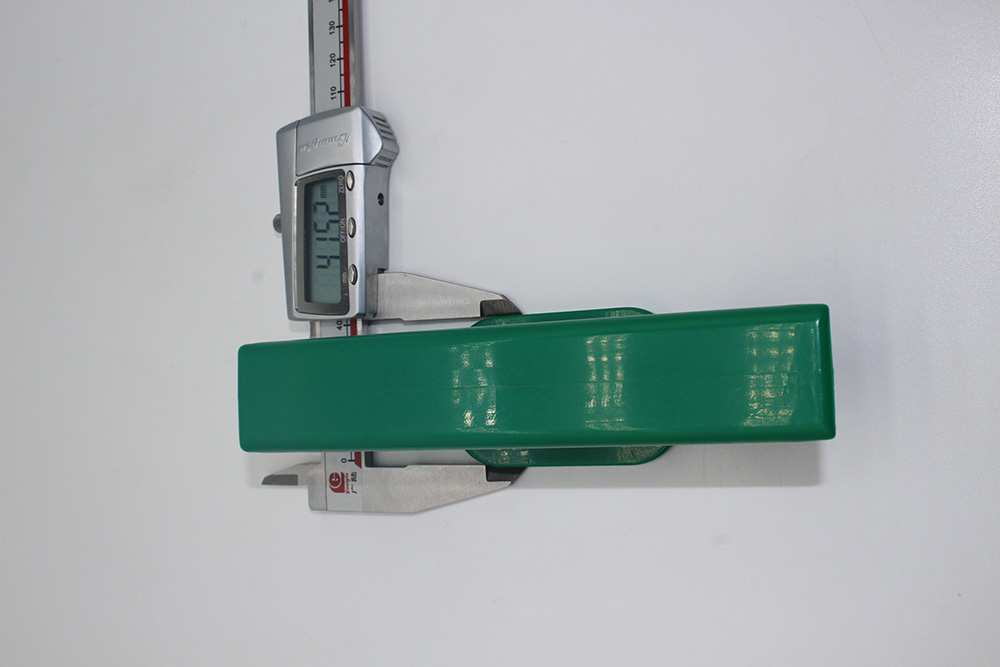
Dimensional verification of grip features and thread geometry
Torque testing to confirm that opening forces remain within accessible ranges
Functional testing for child-resistance and senior accessibility
Elderly-friendly packaging represents a critical intersection of safety, accessibility, and dignity. By incorporating ergonomic design principles—enhanced grip features, multi-start threads, and improved leverage points—manufacturers can create closures that seniors can open easily while maintaining robust child-resistance.
Shuanghao's approach to elderly-friendly caps combines decades of closure molding expertise with a deep understanding of ergonomic design principles, delivering packaging solutions that serve all users effectively.