
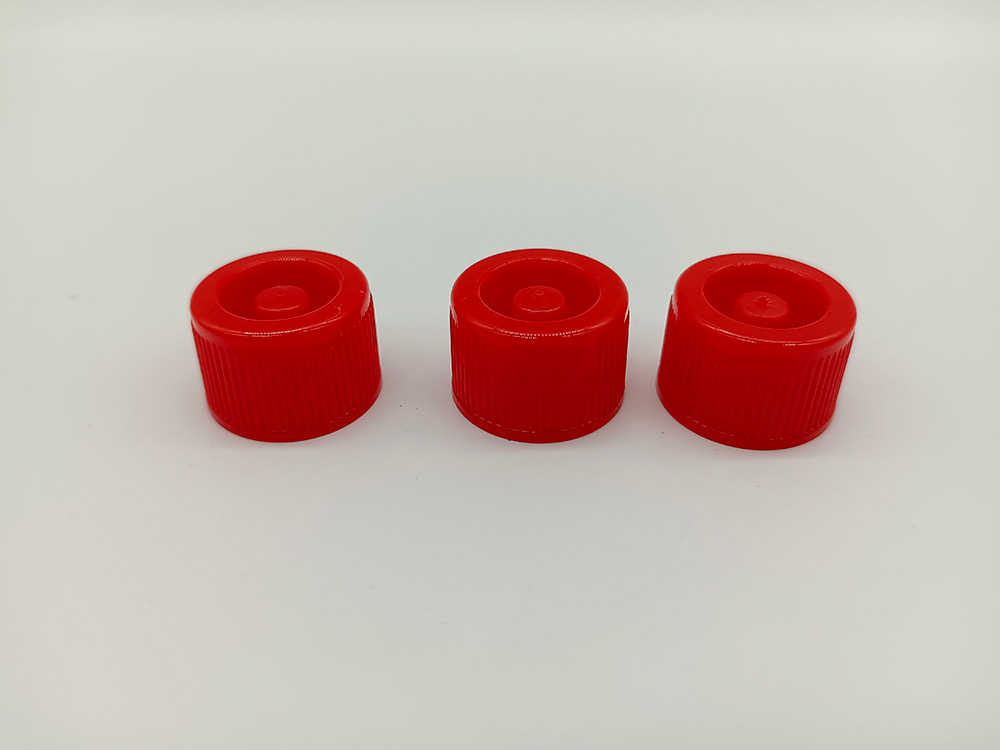
In the world of packaging, tamper evidence and ease of opening are two critical consumer expectations. Caps with tear-off strips address both requirements. The consumer pulls a tab, tears away a strip, and the cap is opened—with clear evidence that the package has not been previously accessed.
Tear-off strip caps are found on a wide range of products: beverage bottles, condiment containers, pharmaceutical vials, and industrial chemical drums. They provide tamper evidence through the visible absence of the strip upon first opening. They offer easy opening without tools. They enable one-handed operation. They signal freshness and security.
But designing and molding caps with tear-off strips is technically demanding. The tear lines must be consistent enough to tear cleanly but strong enough to withstand handling. The pull tab must be accessible and functional. The mold must accommodate complex geometries.
At Shuanghao, we have developed specialized mold solutions for caps with tear-off strips. This article explores our approach to engineering these functional closures.
Tear-off strip caps are closures that incorporate a removable strip. The strip is defined by lines of weakness—score lines or frangible bridges. A pull tab provides a grip for the consumer to initiate tearing.
When the pull tab is pulled, the strip separates along the tear lines, allowing access to the container contents. The tear-off strip provides a visible indication of tampering—if the strip is missing or partially removed, the package has been opened.
Different applications require different tear-off strip configurations.
A full circumferential strip wraps completely around the cap skirt. A tear line runs around the circumference, sometimes with a second line defining the strip boundaries. Pulling the tab separates the strip from the cap body, leaving a clean edge on the remaining cap.
This design is common on beverage and condiment caps where a complete removal is desired.
A partial strip tears only partway around the cap. The strip remains attached at one point, creating a hinge effect. This can be an easy-open feature for applications where the cap is removed and replaced.
Score lines can be formed on the inner surface of the cap skirt, making them less visible to consumers. This approach, common in metal tear-off caps, can also be applied to plastic designs. The cap's sealing capability remains intact until the strip is torn .
Some tear-off strip designs incorporate a separate security ring below the cap skirt. The security ring remains on the container after the cap is removed, providing an additional tamper-evident indicator .
Tear lines are lines of weakness that allow controlled tearing. In metal caps, these are score lines created during manufacturing . In plastic caps, they can be grooves, frangible bridges, or other configurations.
The placement of tear lines is critical for both seal integrity and tear performance. In one design, a circumferential tear line is placed just below the upper edge of the cap, creating a tear-off strip that represents a major portion of the cylindrical skirt .
Precise control of tear line depth is essential. Too shallow, and the strip will not tear cleanly. Too deep, and the cap may fail prematurely during handling or shipping. Shuanghao's precision machining ensures consistent tear line dimensions across all cavities.
The pull tab must be readily accessible and provide a secure grip. For caps with security rings, the pull tab may be partially hidden behind the tear-off strip, becoming fully accessible only after the strip is removed .
The pull tab must withstand the force required to initiate tearing. In plastic caps, the pull tab is often designed with reinforcing ribs or thickened sections to prevent tearing at the attachment point.
In some tear-off cap designs, the pull tab and tongue may be oriented at an angle of 45-90 degrees from the cap top. This positioning can offer advantages in handling and manufacturing .
Shuanghao's approach to tear-off strip cap molds addresses several key challenges.
Tear-off strip geometries often create undercuts that complicate ejection. Frangible bridges, tear grooves, and pull tabs may all require specialized ejection mechanisms. Shuanghao uses collapsible cores, lifters, and slide systems to release these features cleanly.
The thin tear lines and frangible bridges are sensitive to ejection forces. Shuanghao uses sleeve ejectors and air-assist ejection to minimize stress on the tear-off strip during part release .
Uniform cooling is essential to prevent dimensional variation in tear line depth and pull tab geometry. Uneven cooling can cause warpage that affects tear performance .
Gate placement must promote uniform filling of tear line areas and pull tab features. Shuanghao uses mold flow analysis to optimize gate location and ensure complete fill of thin sections.
Material choice significantly affects tear-off strip performance.
PP is commonly used for tear-off strip caps due to its good tear resistance and toughness. For tear strips requiring clean tear, PP is often the material of choice. Impact copolymer PP provides enhanced tear strength.
HDPE offers good chemical resistance and flexibility. It can be used for tear-off strip caps where chemical resistance is a priority. However, PE may be less predictable in tearing behavior compared to PP.
The material's tear strength and elongation properties must be matched to the application requirements. High tear resistance is needed for industrial applications. Controlled tear is needed for consumer applications.
Tear-off strip caps require specialized quality control.
The force required to tear the strip is measured using tensile testing. This ensures consistency from cap to cap. Force variation across cavities is monitored .
Tear lines are inspected for consistency and completeness. Pull tabs are checked for correct orientation and integrity. The tear-off strip is checked for complete formation.
Critical dimensions such as tear line depth, pull tab dimensions, and strip width are measured using precision instruments. Tolerance control is critical .
Shuanghao's experience in tear-off strip cap molds is backed by decades of expertise in complex cap molding. Our design and manufacturing process includes precision machining of tear line features, advanced ejection mechanisms for undercuts, mold flow analysis for uniform filling, material guidance for optimal tear performance, and quality validation through tear force testing.
Tear-off strip caps provide tamper evidence, consumer convenience, and product freshness assurance. But they demand specialized mold engineering.
Shuanghao's solutions for caps with tear-off strips deliver consistent tear line formation, robust pull tab performance, reliable ejection without damage, and quality validation through rigorous testing. Whether you need tamper-evident beverage caps, easy-open pharmaceutical closures, or industrial containers with security features, Shuanghao has the expertise to engineer caps that tear when they should and stay intact when they should.
Choose Shuanghao. Choose precision tear-off solutions.