
The pressure to reduce plastic consumption has never been greater. Brand owners are committing to ambitious sustainability targets. Regulators are implementing plastic taxes and extended producer responsibility schemes. Consumers are demanding environmentally responsible packaging.
For bottle cap manufacturers, weight reduction is one of the most direct paths to sustainability. Every gram removed from a cap saves material, reduces shipping weight, lowers carbon footprint, and decreases costs.
But lightweighting cannot come at the expense of performance. A cap that leaks, cracks, or fails to seal is not sustainable—it is waste. The challenge is balancing material reduction with structural integrity.
At Shuanghao, we have developed precision mold engineering techniques that enable dramatic weight reduction without compromising cap performance. This article reveals how we achieve this balance.
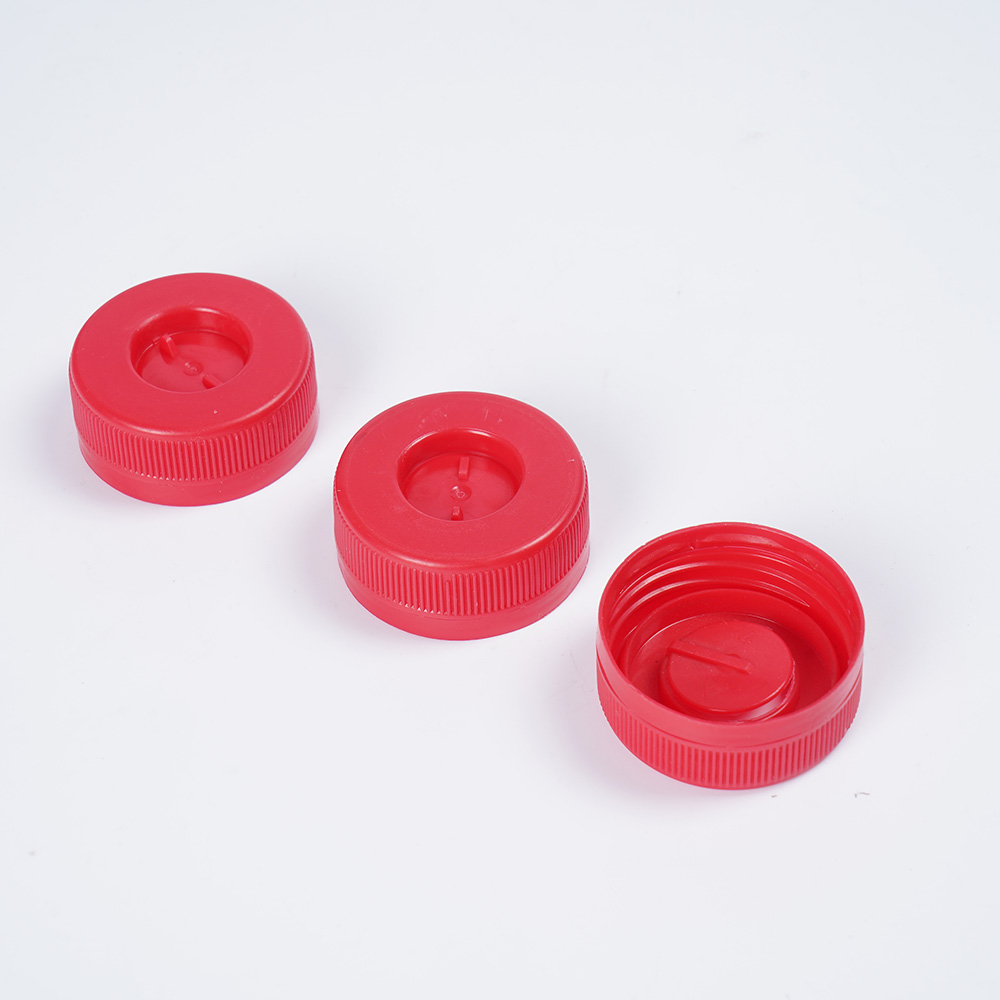
Before discussing solutions, it is essential to understand the potential impact of cap lightweighting.
Typical Cap Weights
A standard 28-millimeter water bottle cap typically weighs 2.5 to 3.5 grams. A sports cap may weigh 4 to 6 grams. A pharmaceutical child-resistant cap may weigh 5 to 8 grams.
Weight Reduction Potential
Shuanghao customers typically achieve weight reductions of 15 to 30 percent compared to conventional designs. A 3-gram cap reduced to 2.4 grams saves 0.6 grams per cap. For a manufacturer producing 100 million caps annually, this saves 60 tons of plastic per year.
The Savings Multiply
Weight reduction creates cascading benefits. Less material means lower raw material costs. Lighter caps reduce shipping weight, lowering transportation emissions. Less plastic in packaging reduces end-of-life environmental impact.
Reducing cap weight affects multiple performance attributes.
Potential Failure Modes
Reduced wall thickness decreases structural strength, potentially causing cap deformation under load. Thinner sections may compromise sealing surface integrity, leading to leakage. Reduced material in thread areas affects opening torque consistency. Thinner tamper-evident bands may break prematurely or inconsistently.
The Engineering Balance
Successful lightweighting requires engineering excellence. Material must be removed from low-stress areas while preserved in high-stress areas. Wall thickness must be reduced where possible and reinforced where necessary. Every gram of weight reduction must be validated to ensure performance.
Reducing wall thickness is the most direct path to weight reduction.
Minimum Wall Thickness
The minimum achievable wall thickness depends on material, cap geometry, and processing. For polypropylene caps, Shuanghao typically achieves wall thicknesses of 0.6 to 0.8 millimeters in non-critical areas. For HDPE, 0.7 to 0.9 millimeters is typical. Sealing surfaces require 0.8 to 1.0 millimeters for reliable performance.
Uniform vs. Variable Wall Thickness
Uniform thin walls are easiest to process but may not be optimal. Variable wall thickness places material where it is needed most. Shuanghao uses variable wall thickness designs that are thicker at high-stress locations such as thread roots and sealing surfaces, and thinner at low-stress locations such as side walls and top panels.
Wall Transition Design
Transitions between thick and thin sections must be smooth. Sharp transitions create stress concentrations that can lead to cracking. Shuanghao designs gradual transitions with generous radii. Tapered transitions distribute stress evenly across the wall.
Ribs are the most efficient way to add stiffness without adding weight.
Rib Design Principles
Rib thickness should be 50 to 70 percent of the adjacent wall thickness to prevent sink marks. Rib height should be maximized within available space, as taller ribs provide more stiffness per unit weight. Rib spacing should be optimized, with closer spacing providing more uniform support.
Shuanghao uses finite element analysis to optimize rib placement. High-stress areas receive more ribs or thicker ribs. Low-stress areas receive fewer ribs or thinner ribs. Rib intersections are radiused to prevent stress concentration.
Rib Efficiency
Ribs can increase stiffness by 200 to 300 percent with only 5 to 10 percent additional weight. A well-ribbed thin wall is stiffer than a solid thick wall of the same weight. Shuanghao's rib designs maximize this efficiency.
Material choice significantly affects lightweighting potential.
High-Flow Materials
Materials with higher melt flow index fill thin walls more easily. Shuanghao recommends MFI of 15 to 25 for lightweight polypropylene caps. High-flow materials reduce injection pressure requirements and allow thinner walls.
High-Stiffness Materials
Increased stiffness allows thinner walls for the same load-bearing capacity. Shuanghao works with material suppliers to identify high-modulus grades. Nucleated polypropylene provides higher stiffness without weight penalty. Filled materials such as talc-filled PP offer higher stiffness but may affect appearance.
Impact-Modified Materials
Thinner walls are more susceptible to impact damage. Impact-modified grades provide greater toughness. Shuanghao balances stiffness and impact resistance based on application requirements.
Lightweighting cap molds requires a systematic engineering approach.
Step 1: Baseline Analysis
Shuanghao begins with analysis of existing cap performance. Wall thickness distribution is mapped across the cap. Stress concentrations are identified through finite element analysis. Material usage is measured and benchmarked.
Step 2: Design Optimization
Candidate modifications are evaluated through simulation. Wall thickness is reduced in low-stress areas. Ribs are added or optimized for stiffness. Material is redistributed from thick to thin areas. Thread profiles are optimized for material efficiency.
Step 3: Mold Design for Lightweighting
The mold must be designed to produce lightweight caps consistently. Balanced filling ensures thin walls fill completely. Precision venting prevents air traps in thin sections. Optimal cooling prevents warpage of thin walls. High-speed injection fills thin sections before material freezes.
Step 4: Process Optimization
Processing parameters are optimized for lightweight molding. Higher injection speed fills thin walls before freeze-off. Higher mold temperature improves material flow into thin sections. Higher melt temperature reduces viscosity for better fill.
Step 5: Validation
Lightweight caps undergo comprehensive testing. Dimensional inspection verifies wall thickness distribution. Functional testing confirms sealing and torque performance. Mechanical testing validates strength and impact resistance. Long-term testing ensures durability over product life.
Validation is essential before deploying lightweight caps.
Dimensional Verification
Shuanghao uses computed tomography for internal dimension measurement. Wall thickness distribution is mapped throughout the cap. Thin sections are verified to meet specifications. Warpage is measured under no-load conditions.
Functional Testing
Seal integrity is tested using vacuum decay or pressure testing. Opening torque is measured under standard conditions. Closing torque is verified for consumer convenience. Tamper-evident band performance is validated.
Mechanical Testing
Compression testing measures cap strength under vertical load. Impact testing evaluates resistance to dropping. Thread pull-off testing verifies retention strength. Hinge cycling tests flip-top durability.
Accelerated Aging
Caps are subjected to accelerated aging conditions. Elevated temperature storage simulates long-term shelf life. Temperature cycling simulates distribution conditions. UV exposure tests outdoor applications.
Problem: Thin Wall Warpage
Warpage occurs when thin walls cool unevenly. Solutions include balancing cooling circuit flow, increasing cooling time, adding ribs for stability, and reducing wall thickness variation.
Problem: Inconsistent Fill
Incomplete filling of thin sections causes short shots. Solutions include increasing injection speed, raising melt temperature, improving venting, and adjusting wall thickness locally.
Problem: Reduced Stiffness
Caps feel flimsy or deform under light load. Solutions include optimizing rib placement, increasing rib height, using higher stiffness material, and selectively thickening high-stress areas.
Problem: Seal Failure
Leakage indicates sealing surface deformation. Solutions include maintaining sealing surface thickness, reinforcing sealing area with support ribs, verifying flatness after lightweighting, and checking for sink marks on sealing surfaces.
Customer Case: Major Water Bottler
A major water bottler sought to reduce cap weight by 15 percent without compromising seal integrity or consumer experience. Existing cap weighed 3.2 grams.
Shuanghao redesigned the cap with variable wall thickness, optimized rib structure, and high-flow polypropylene. The new cap weighed 2.6 grams, a 19 percent reduction. Seal integrity testing showed no leakage. Opening torque remained within specification. The company saved over 100 tons of plastic annually.
Customer Case: Sports Drink Manufacturer
A sports drink manufacturer needed a lighter flip-top cap. The existing cap weighed 5.8 grams. The cap required high impact resistance for active consumers.
Shuanghao used impact-modified polypropylene. Wall thickness was reduced in low-stress areas. Ribs were added to the hinge area for durability. The final cap weighed 4.5 grams, a 22 percent reduction. Drop testing showed no failures. The cap passed 10,000 hinge cycles.
Shuanghao's lightweighting expertise enables thin-wall design with variable wall thickness and smooth transitions. Rib optimization includes strategic rib placement for maximum stiffness per gram. Material guidance includes high-flow and high-stiffness grades for lightweighting. Process optimization includes high-speed filling and precise cooling for thin walls. Comprehensive validation includes dimensional, functional, and mechanical testing.
Lightweight cap molding is not about making caps thinner everywhere. It is about removing material where it is not needed and preserving or reinforcing it where it is needed.
Shuanghao's precision mold engineering enables weight reduction of 15 to 30 percent without compromising structural integrity. Through thin-wall design, rib optimization, material selection, and rigorous validation, we produce caps that use less plastic and perform just as well.
Whether you are responding to sustainability targets, plastic taxes, or consumer demand, Shuanghao has the lightweighting expertise to help you achieve your goals.
Choose Shuanghao. Choose lighter caps. Choose uncompromised performance.