
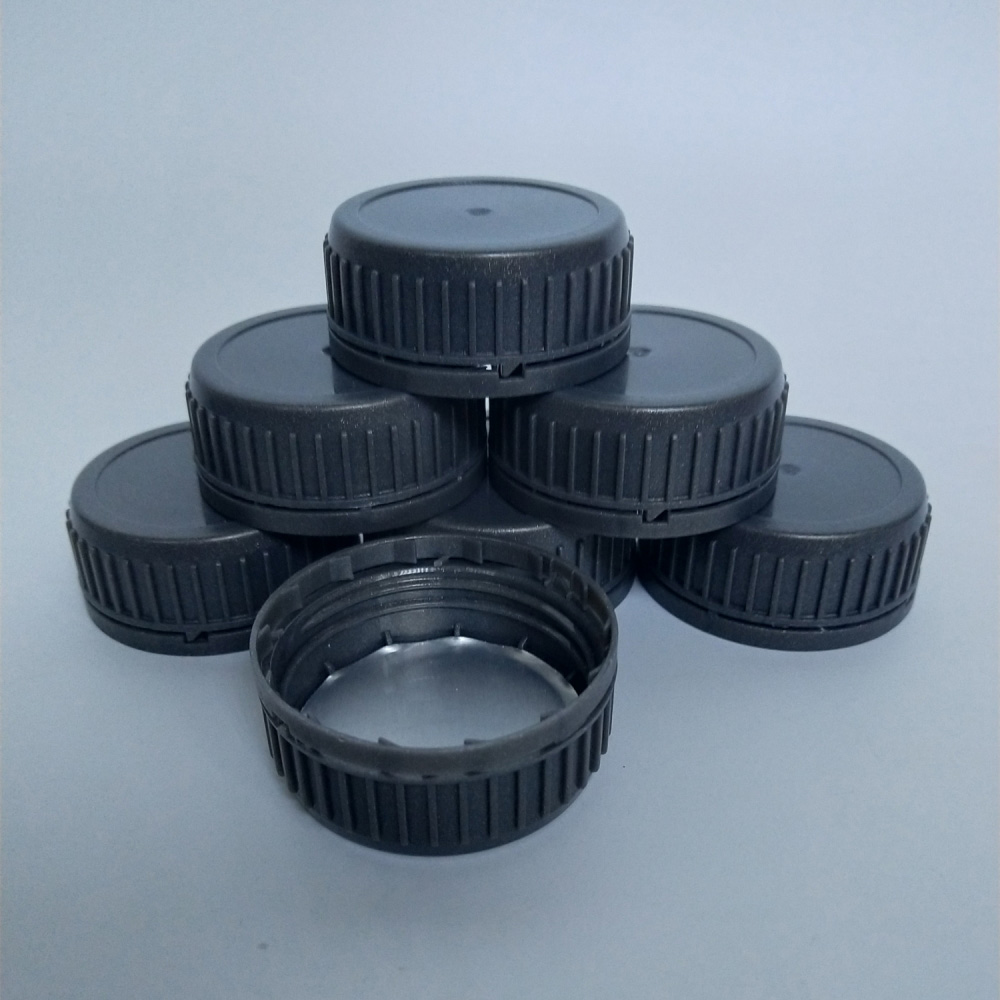
Every injection molded bottle cap bears the signature of its birth: ejector pin marks. These small circular impressions are where ejector pins pushed the cap off the core. They are inevitable. But they need not be ugly.
Ejector pin marks that are too deep, too large, or poorly located create cosmetic defects that consumers notice. For premium brands, even subtle marks are unacceptable. For pharmaceutical caps, ejector pin marks can compromise sealing surfaces or provide hiding places for contaminants.
At Shuanghao, we have developed comprehensive strategies for controlling ejector pin marks. This article reveals how to minimize their visibility, optimize their location, and ensure they do not affect cap function.
Before discussing control strategies, it is essential to understand what ejector pin marks are and why they occur.
How Ejector Pins Work
Ejector pins are steel rods that push the cap off the core after molding. They are mounted in an ejector plate that moves forward at the end of each cycle. The pins contact the cap at specific points, applying force to overcome the cap's grip on the core.
The contact between the pin and the cap leaves a small circular impression. This impression is the ejector pin mark.
Why Marks Are Unavoidable
The pin must contact the cap to apply ejection force. There is no way to eject a cap without some contact. However, the visibility and depth of the mark can be controlled.
Not all ejector pin marks are equal. Their impact depends on several factors.
Depth
Deep marks are visible and may be palpable to the consumer. Shallow marks may be barely noticeable. Extremely shallow marks may be invisible to the naked eye.
Location
Marks on visible exterior surfaces are problematic. Marks hidden under the tamper-evident band are acceptable. Marks on sealing surfaces are never acceptable.
Size
Larger diameter pins distribute force over greater area, producing shallower marks per unit of ejection force. Smaller diameter pins concentrate force, producing deeper marks.
Surface Finish
Smooth pin tips produce cleaner marks with less visible witness line. Rough or scratched pin tips create ragged marks that are more visible.
Shuanghao employs multiple strategies to control ejector pin marks.
Strategy 1: Optimize Pin Placement
Pin placement is the most important decision affecting mark visibility.
Placement Principles
Locate pins where marks will be least visible. Under the tamper-evident band is ideal. Inside the cap on non-visible surfaces is good. On the cap exterior is only acceptable for industrial caps. Sealing surfaces must be completely avoided.
Distribute pins symmetrically around the cap. Uneven distribution creates uneven marks and may cause tilting. Space pins evenly to distribute ejection force.
Placement Guidelines by Cap Type
For beverage caps, pins should be placed under the tamper-evident band where they are completely hidden. For cosmetic caps, pins should be placed inside the cap or under the liner. For pharmaceutical caps, pins must avoid sealing surfaces and interior cavity walls that contact product. For industrial caps, exterior placement may be acceptable.
Strategy 2: Optimize Pin Size
Pin diameter directly affects mark depth.
The Size-Depth Relationship
A larger diameter pin distributes the same ejection force over a larger area, resulting in lower pressure and shallower mark. A smaller diameter pin concentrates force, creating deeper marks.
Shuanghao uses the largest practical pin diameter for each application. This means using the maximum pin diameter that fits within available space.
Typical pin diameters for 28mm caps are 4 to 6 millimeters for standard applications, 6 to 8 millimeters for cosmetic caps requiring minimal marks, and 3 to 4 millimeters for tight spaces.
Strategy 3: Optimize Pin Surface Finish
The pin tip surface finish affects mark appearance.
Surface Finish Guidelines
Pin tips should be polished to Ra 0.2 micrometers or smoother. Polished tips produce clean, uniform marks. Rough tips produce ragged, visible marks. Pin tips should be perpendicular to the cap surface. Angled pins create asymmetric marks.
Shuanghao maintains ejector pins to exacting surface finish standards.
Strategy 4: Minimize Required Ejection Force
Lower ejection force means shallower marks.
How to Reduce Ejection Force
Increase draft angles on core surfaces. Core surface finish should be polished to Ra 0.2 micrometers. Add air ejection to break vacuum before mechanical ejection. Increase cooling time for complete solidification. Use mold release agents if appropriate.
By reducing the force needed to eject the cap, marks become shallower.
Strategy 5: Optimize Ejector Pin Count
More pins mean each pin bears less force.
Pin Count Guidelines
Small caps (28mm) typically use 4 to 6 pins. Standard caps (38mm) use 6 to 8 pins. Large caps (48mm+) use 8 to 12 pins. Thin-walled caps require more pins to distribute force without deformation.
Additional pins reduce force per pin, reducing mark depth.
Strategy 6: Use Alternative Ejection Methods
For caps where zero marks are required, alternatives to pin ejection exist.
Sleeve Ejectors
A sleeve ejector is a tubular component that surrounds the core. It pushes the entire cap rim simultaneously. Marks are eliminated entirely because there are no discrete pins.
Sleeve ejectors are ideal for cosmetic caps, high-gloss caps, and pharmaceutical caps where marks cannot be tolerated.
Air Ejection
Air ejection uses compressed air to lift the cap off the core. There is no mechanical contact, so there are no marks. Air ejection may be used alone or combined with pins.
Combined Ejection
For most caps, a combination approach works best. Air ejection breaks the vacuum and lifts the cap slightly. Pins complete the ejection with lower force, producing shallower marks.
Problem: Marks Too Deep
Marks that are visibly indented into the cap surface indicate excessive ejection force or insufficient pin area.
Solutions include increasing pin diameter, adding more pins, reducing ejection force through better draft or polish, and increasing cooling time for more rigid caps.
Problem: Marks Visible on Exterior
Marks on visible surfaces indicate poor pin placement.
Solutions include relocating pins to hidden areas such as under TE band, repositioning pins inside the cap, or switching to sleeve ejectors.
Problem: Asymmetric Marks
Marks that are deeper on one side of the cap indicate uneven ejection force.
Solutions include checking for stuck pins on the shallow mark side, verifying ejector plate moves evenly, adding pins to balance force distribution, and checking for core-cavity alignment issues.
Problem: Ragged or Rough Marks
Marks with rough edges or irregular shape indicate pin tip damage or contamination.
Solutions include polishing pin tips to smooth finish, replacing damaged pins, cleaning residue from pin tips, and verifying pin perpendicularity.
Shuanghao uses several methods to evaluate ejector pin marks.
Visual Inspection
Under controlled lighting, marks are inspected for visibility, depth, and location. Comparison to standard samples ensures consistency.
Profilometer Measurement
Surface profilometers measure mark depth. Typical acceptable depths are less than 0.05 millimeters for standard caps, less than 0.02 millimeters for cosmetic caps, and less than 0.01 millimeters for pharmaceutical caps.
Consumer Panel Testing
For premium cosmetic caps, consumer panels evaluate mark visibility. Consumer perception sets the standard, not engineering measurements.
Customer Case: Premium Cosmetic Cap
A luxury skincare brand required caps with no visible ejector pin marks. Existing caps had visible marks on the interior that customers could see when opening the jar.
Shuanghao designed a mold with sleeve ejectors instead of pins. Marks were eliminated entirely. The customer achieved the premium appearance required for their brand.
Customer Case: High-Volume Water Bottle Cap
A water bottle cap manufacturer had visible ejector pin marks on the underside of caps. While not normally visible, consumers occasionally noticed them.
Shuanghao relocated pins under the tamper-evident band, where marks are completely hidden. Pin diameter was increased from 4mm to 6mm. Ejection force was reduced through improved core polish.
Marks were eliminated from visible areas. Consumer complaints about cap appearance dropped to zero.
Shuanghao's comprehensive approach to ejector pin mark control delivers optimized pin placement to hide marks in non-visible areas. Optimized pin size using largest practical diameter for shallower marks. Superior pin finish with Ra 0.2 micrometers or smoother. Reduced ejection force through draft angle, polish, air assist, and cooling. Strategic pin count with sufficient pins to distribute force. Alternative ejection methods including sleeve ejectors and air ejection for zero-mark applications.
Ejector pin marks need not be a defect. With proper design and execution, they can be made invisible to consumers or eliminated entirely.
Shuanghao's ejector pin mark control strategies deliver marks that are shallow, hidden from view, and non-damaging to cap function. Through optimized pin placement, size, finish, and force reduction, we produce caps that look as good as they perform.
Whether you produce beverage caps where marks are hidden under TE bands, cosmetic caps requiring zero visible marks, or pharmaceutical caps requiring sterile sealing surfaces, Shuanghao has the ejector pin expertise to meet your requirements.
Choose Shuanghao. Choose invisible ejector pin marks. Choose perfect caps.