
In injection molding, time is money. Every second added to the cycle time reduces output, increases cost per part, and lowers profitability. For high-volume cap manufacturers producing millions of caps daily, even a one-second reduction in cycle time can translate to hundreds of thousands of dollars in annual savings.
Cooling is the dominant factor in cycle time. It typically accounts for 70 to 80 percent of the total injection molding cycle. While injection, packing, and ejection are measured in seconds or fractions of seconds, cooling is measured in multiples of seconds.
At Shuanghao, we have made cooling optimization a core engineering discipline. Our advanced cooling strategy reduces cycle times while maintaining, and often improving, cap quality. This article reveals how we achieve faster cycles through innovative cooling design.
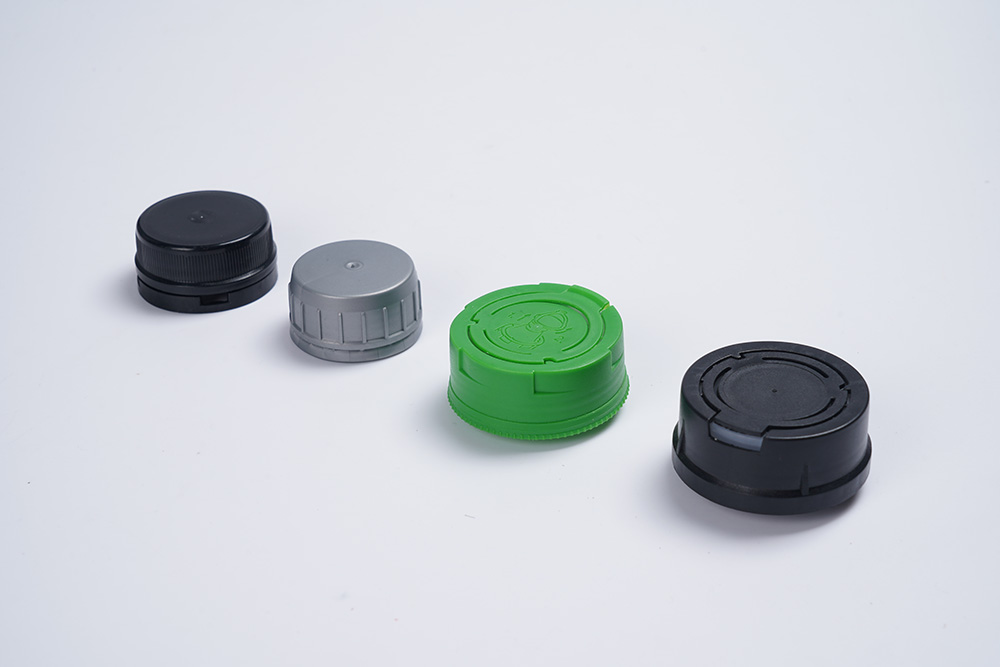
To understand why cooling is so critical, we must understand what happens during the cooling phase.
The Cooling Process
After molten plastic is injected into the cavity, it must cool from its melt temperature of 200 to 240 degrees Celsius down to ejection temperature of 60 to 80 degrees Celsius. During this cooling period, the plastic solidifies, shrinks, and develops its final properties.
The cooling phase cannot be rushed without consequences. If the cap is ejected too early, it will warp, distort, or stick to the core. If cooling is uneven, differential shrinkage will create dimensional variation and residual stress.
The Cooling Challenge
The cap geometry presents unique cooling challenges. The thickest sections such as the top and sealing flange take the longest to cool. The thinnest sections such as the tamper-evident band cool quickly. Sharp transitions between thick and thin sections create hot spots. The core pin must cool the inside of the cap while the cavity cools the outside.
Traditional cooling channels are straight-drilled lines that run parallel to the mold surface. While effective for simple geometries, they cannot follow the complex contours of a bottle cap.
Shuanghao has developed a comprehensive cooling strategy that addresses each of these challenges.
Conformal cooling is the foundation of Shuanghao's cooling strategy. Unlike traditional straight-drilled channels, conformal cooling channels follow the exact contour of the cap geometry.
How Conformal Cooling Works
Conformal cooling channels are machined or 3D-printed to match the shape of the cap. For a bottle cap, the channels follow the circular contour of the cap top, the vertical contour of the side wall, and the complex shape of the tamper-evident band. The channels are placed close to the cavity surface where cooling is needed most.
Benefits of Conformal Cooling
Conformal cooling reduces cooling time by 15 to 25 percent compared to traditional cooling channels. It eliminates hot spots that cause dimensional variation and warpage. It provides uniform temperature distribution across the entire cap. It reduces residual stress that can cause post-mold distortion.
Application to Cap Features
For the cap top, the thickest section of the cap, conformal channels follow the circular contour of the top surface, placed close to the cavity for rapid heat extraction. For the side wall, channels follow the vertical contour, with spiral or helical designs for uniform cooling. For the tamper-evident band, channels follow the thin band contour with precise temperature control to prevent distortion.
Different areas of the cap have different cooling requirements. Shuanghao's zone-specific cooling circuits allow independent temperature control for each area.
Cap Cooling Zones
The thread area requires uniform cooling for consistent thread dimensions and opening torque. Cooling should be moderate to prevent warpage while ensuring dimensional stability.
The sealing surface requires precise cooling for reliable sealing performance. Cooling must be uniform to prevent ovality or surface defects.
The top area is the thickest section and requires the most aggressive cooling. High cooling capacity is needed to extract heat from this high-mass area.
The tamper-evident band is the thinnest section and requires the gentlest cooling. Low cooling capacity prevents over-cooling that could cause brittleness.
Independent Circuit Benefits
Each cooling zone has its own temperature control, allowing precise optimization for each cap area. Circuits can be balanced to achieve uniform part temperature at ejection. Different coolant temperatures can be used for different zones. Flow rates can be adjusted independently.
Shuanghao uses computational fluid dynamics to optimize cooling channel design before the mold is manufactured.
The CFD Process
Engineers create a 3D model of the cap, cavity, and proposed cooling channels. The model is divided into millions of small elements for analysis. Coolant flow, temperature distribution, and heat transfer are simulated. The results identify hot spots, dead zones, and areas of inadequate cooling. Channel placement, diameter, and flow rates are optimized based on simulation results. The optimized design is validated through additional simulation iterations.
Benefits of CFD Optimization
CFD eliminates guesswork in cooling design. It identifies problems before manufacturing, avoiding costly mold modifications. It ensures uniform cooling across all cavities. It predicts cooling time with high accuracy, enabling precise cycle time setting.
Shuanghao uses advanced cooling components to maximize heat transfer.
Beryllium Copper Inserts
For areas requiring rapid heat extraction, Shuanghao uses beryllium copper inserts. Beryllium copper has thermal conductivity 5 to 10 times higher than tool steel. It is used in cap top areas and sealing surfaces. Benefits include faster cooling of thick sections, elimination of hot spots, and improved dimensional stability.
Baffles and Bubblers
For deep, narrow areas where conventional cooling channels cannot reach, Shuanghao uses baffles and bubblers. These devices direct coolant to the bottom of blind holes and back up through the center. They are used in core pins and narrow cavity details. Benefits include cooling of previously inaccessible areas and more uniform core pin temperature.
Heat Pipes
For extreme cooling requirements, Shuanghao offers heat pipe technology. Heat pipes transfer heat with very high efficiency using phase-change principles. They are used in high-output molds for maximum cooling capacity. Benefits include fastest possible cooling times and consistent performance at high production rates.
Shuanghao's cooling circuit layout ensures uniform cooling across all cavities in multi-cavity molds.
Balanced Flow Paths
All cooling circuits are designed with equal flow path lengths to ensure balanced coolant distribution. Pressure drops are equalized across all circuits. Flow rates are matched cavity to cavity.
Cavity-to-Cavity Consistency
For 48-cavity and 72-cavity molds, Shuanghao ensures that every cavity receives the same cooling. Circuit layouts are mirrored to provide identical cooling to each cavity position. Flow meters on each circuit verify equal flow. Temperature sensors monitor circuit performance.
Coolant Supply
Shuanghao recommends dedicated mold temperature controllers for each cooling zone. Chilled water at 5 to 15 degrees Celsius is typical for cap molds. Flow rates of 10 to 20 liters per minute per circuit are recommended.
To understand the impact of Shuanghao's cooling strategy, compare a traditional mold to a Shuanghao advanced cooling mold.
Typical 48-Cavity Cap Mold with Traditional Cooling
Cooling time is typically 8 to 10 seconds. Total cycle time is 12 to 15 seconds. Output per hour is approximately 11,500 to 14,400 caps. Cooling accounts for 67 to 70 percent of cycle time.
Same Mold with Shuanghao Advanced Cooling
Cooling time is typically 5 to 7 seconds. Total cycle time is 8 to 10 seconds. Output per hour is approximately 17,300 to 21,600 caps. Cooling accounts for 62 to 70 percent of cycle time.
The cycle time reduction of 20 to 35 percent translates directly to higher output. A 48-cavity mold running at 9-second cycle produces approximately 19,200 caps per hour. Over 8,000 production hours per year, this is 153.6 million caps annually. A 2-second cycle time reduction adds approximately 34 million caps per year.
Faster cycles are valuable only if quality is maintained or improved. Shuanghao's cooling strategy delivers both.
Improved Dimensional Stability
Uniform cooling eliminates warpage and distortion. Consistent cooling cavity to cavity ensures identical cap dimensions from every cavity. Reduced residual stress prevents post-mold dimensional change.
Enhanced Surface Quality
Elimination of hot spots prevents sink marks on the cap top. Uniform cooling prevents flow marks and surface defects. Proper cooling of sealing surfaces ensures smooth, defect-free finish.
Consistent Torque
Uniform thread cooling ensures consistent thread dimensions. This directly translates to consistent opening torque across all caps. Tamper-evident band performance is also more consistent.
Customer Case: High-Volume Water Bottle Cap Producer
A high-volume water bottle cap producer was operating 72-cavity molds with traditional cooling. Cycle time was 12 seconds. The company needed to increase capacity without adding new molding machines.
Shuanghao provided new molds with conformal cooling and zone-specific circuits.
Cycle time decreased from 12 seconds to 8.5 seconds, a 29 percent reduction. Output per machine increased by 29 percent. The company avoided purchasing two additional molding machines. Annual savings exceeded $400,000.
Customer Case: Pharmaceutical Cap Manufacturer
A pharmaceutical cap manufacturer needed extremely consistent cap dimensions for child-resistant closures. Traditional cooling was producing dimensional variation that affected closure reliability.
Shuanghao provided molds with CFD-optimized cooling and beryllium copper inserts in critical areas.
Cavity-to-cavity dimensional variation decreased by 60 percent. Child-resistant closure reliability improved from 98.5 percent to 99.8 percent. Cycle time decreased by 15 percent despite tighter quality requirements. The company gained regulatory approval for the new molds.
For new molds, Shuanghao's cooling strategy is fully integrated from the design stage. Conformal cooling channels are designed based on cap geometry. CFD analysis optimizes channel placement and flow rates. Zone-specific circuits are configured for each cap area. High-efficiency components are specified where needed.
For existing molds, Shuanghao offers cooling retrofits. An engineering assessment evaluates the existing cooling design. CFD analysis identifies improvement opportunities. Conformal cooling inserts can be added to critical areas. Cooling circuits can be reconfigured for better balance. Baffles and bubblers can be added to inaccessible areas.
Shuanghao is confident in our cooling technology. We guarantee a minimum 15 percent cycle time reduction compared to traditional cooling designs for comparable cap geometries. We guarantee cavity-to-cavity temperature variation of less than 2 degrees Celsius at ejection. We guarantee dimensional consistency across all cavities within customer specifications.
These guarantees are backed by CFD analysis reports and trial run documentation.
Cooling no longer needs to be the bottleneck in cap production. Shuanghao's advanced cooling strategy delivers faster cycles without compromising quality.
Through conformal cooling, zone-specific circuits, CFD optimization, high-efficiency components, and balanced circuit layout, Shuanghao molds reduce cooling time by 15 to 25 percent. This translates directly to higher output, lower cost per cap, and improved profitability.
Whether you produce beverage caps, pharmaceutical closures, or industrial caps, Shuanghao has the cooling expertise to help you achieve faster cycles.
Choose Shuanghao. Choose faster cycles. Choose higher output.