
The packaging industry is undergoing a fundamental transformation. Driven by sustainability goals, material cost pressures, and consumer demand for eco-friendly solutions, lightweighting has become a strategic imperative for bottle cap manufacturers worldwide. Reducing cap weight—often by 20–40% or more—delivers significant benefits: lower material costs, reduced carbon footprint, and enhanced brand sustainability credentials.
However, lightweighting presents a critical challenge. As caps become thinner and lighter, maintaining seal integrity and consistent opening torque becomes increasingly difficult. Even minor variations can lead to:
Leakage and product spoilage
Difficult opening that frustrates consumers
Tamper-evident band failure compromising safety
Inconsistent performance across production runs
Increased rejection rates and material waste
At Shuanghao, we have made it our mission to master this challenge. Our bottle cap molds are engineered specifically to deliver exceptional seal integrity and consistent opening torque—even as cap weights continue to decrease. This article explores how Shuanghao's advanced technologies enable lightweighting without compromise.
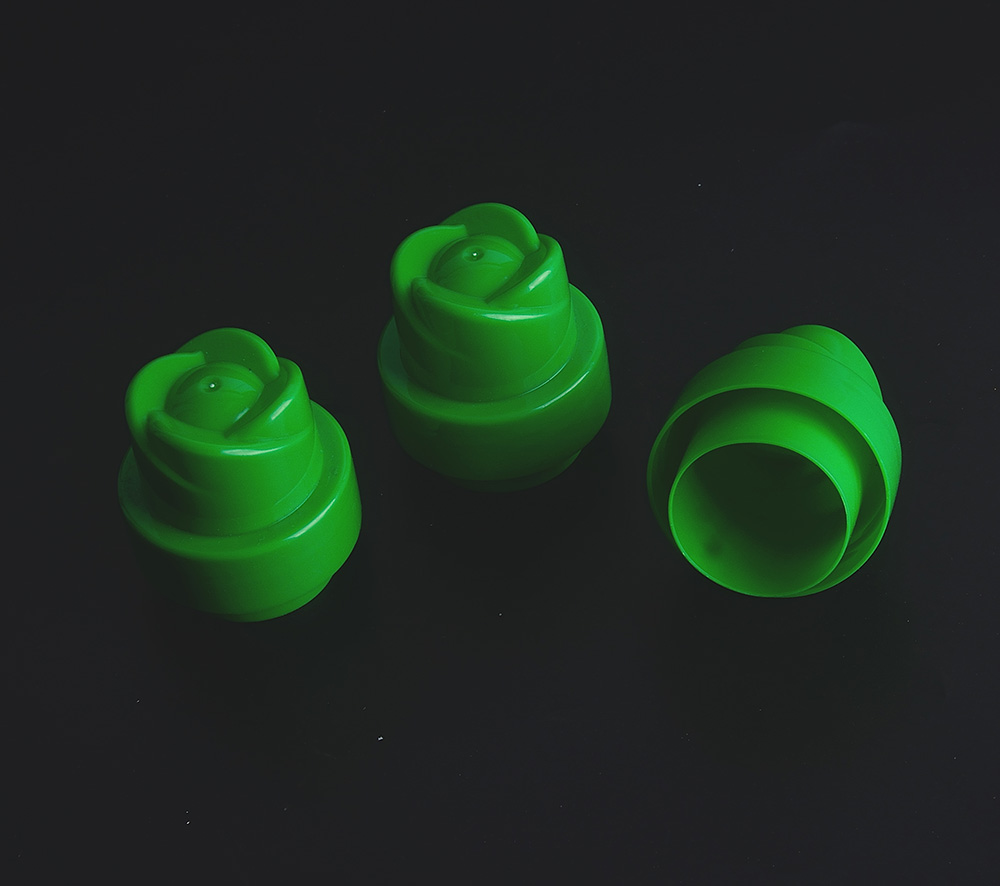
To understand the importance of seal integrity and opening torque, consider the function of a bottle cap. The cap must:
Create a reliable seal that prevents leakage and maintains product freshness
Open with consistent force—easy enough for consumers, tight enough to ensure safety
Maintain tamper-evident features that indicate whether the package has been opened
Perform consistently across millions of caps, from the first to the last
When caps are lightweighted, several factors become critical:
| Factor | Challenge |
|---|---|
| Reduced wall thickness | Less material to absorb stress during sealing |
| Geometric complexity | Thinner sections are harder to fill uniformly |
| Cooling sensitivity | Thin walls cool faster, affecting crystallinity |
| Dimensional stability | Greater susceptibility to warpage |
| Sealing surface precision | Less tolerance for variation |
Seal integrity in bottle caps depends on precise interaction between the cap's sealing geometry and the bottle's neck finish. The most common sealing mechanisms include:
A raised inner ring on the cap creates a tight seal against the bottle's sealing surface. Success depends on:
Precise geometry of the sealing ring
Consistent material distribution around the circumference
Uniform shrinkage during cooling
A flexible liner compresses against the bottle finish. Success depends on:
Consistent liner cavity dimensions
Proper liner retention features
Uniform compression across the sealing surface
The bridge between cap and band must break at consistent force. Success depends on:
Precision bridge geometry
Consistent wall thickness in the band area
Controlled crystallinity for predictable breakage
Opening torque—the force required to unscrew the cap—must be carefully balanced:
| Torque Issue | Consequence |
|---|---|
| Too high | Consumer frustration, difficulty opening |
| Too low | Risk of leakage, perceived lack of freshness |
| Inconsistent | Quality perception issues, customer complaints |
Opening torque is determined by several factors:
Thread geometry (lead angle, pitch, flank angle)
Interference fit between cap and bottle threads
Material properties (stiffness, coefficient of friction)
Sealing compression (how much the seal is compressed)
In lightweight caps, these factors become more sensitive to process variations and dimensional inconsistencies.
The foundation of consistent sealing and torque is cavity-to-cavity precision. Shuanghao achieves this through:
High-speed CNC machining with micron-level accuracy (±0.005mm)
Identical cavity dimensions across all cavities in multi-cavity molds
Consistent surface finishes (Ra 0.2–0.4μm) on sealing surfaces
Precision thread machining that ensures uniform thread geometry
Impact on Quality:
Every cap has identical thread geometry
Sealing surfaces are perfectly uniform
Cavity-to-cavity variation is virtually eliminated
Even melt flow is essential for uniform material distribution—critical for both sealing and torque. Shuanghao hot runner systems feature:
Balanced flow channels ensuring equal melt delivery to every cavity
Individual nozzle temperature control for precise thermal management
Valve gate technology for clean gate marks and consistent packing
Flow simulation to optimize runner geometry before manufacturing
Impact on Quality:
Uniform material distribution around the cap circumference
Consistent wall thickness in sealing and thread areas
Reduced residual stress that could affect torque stability
Cooling is where the cap's final dimensions and properties are set. In lightweight caps, uniform cooling is absolutely critical. Shuanghao molds incorporate:
Conformal Cooling Channels:
Unlike traditional straight-drilled cooling lines, our molds feature channels that follow the contour of the cap geometry. This ensures:
Uniform heat extraction from sealing surfaces, threads, and tamper-evident bands
Reduced cooling time without sacrificing quality
Minimized warpage and shrinkage variation
Zone-Specific Cooling:
Different areas of the cap have different cooling requirements:
Sealing surface — precise cooling for consistent sealing geometry
Thread area — controlled cooling for torque consistency
Tamper-evident band — balanced cooling for reliable breakage
Impact on Quality:
Consistent dimensional stability across all caps
Uniform shrinkage that maintains thread fit
Reliable tamper-evident band performance
Ejection can affect cap geometry if not properly designed. Shuanghao ejection systems ensure:
Smooth, uniform ejection that does not distort sealing surfaces or threads
Strategically placed ejector pins that apply force evenly
Sleeve ejectors for delicate sealing areas
Air-assisted ejection options for sticky or complex cap designs
Impact on Quality:
No post-ejection distortion affecting seal integrity
Consistent cap geometry from ejection to packaging
Even the best mold requires proper processing to achieve optimal results. Shuanghao provides comprehensive process support:
Recommended Parameters:
| Parameter | Lightweight Cap Considerations |
|---|---|
| Melt temperature | Optimize for flow without degradation |
| Mold temperature | Balance cooling speed with dimensional stability |
| Injection speed | Control to ensure complete fill without stress |
| Packing pressure | Maintain adequate packing for sealing surfaces |
| Cooling time | Ensure complete solidification before ejection |
DOE Support:
We help customers conduct Design of Experiments (DOE) to identify optimal processing windows for their specific materials and production conditions.
Different cap applications require different material properties. Shuanghao molds are designed to accommodate:
| Material Type | Application | Mold Considerations |
|---|---|---|
| PP (Polypropylene) | General-purpose caps | Higher shrinkage, flexible hinge designs |
| HDPE (High-Density PE) | Dairy, household chemicals | Lower viscosity, faster filling |
| PET (Polyethylene Terephthalate) | Clear caps, hot-fill | Higher temperature requirements |
| Bio-based materials | Sustainable packaging | Unique shrinkage characteristics |
Every Shuanghao cap mold undergoes rigorous validation to ensure sealing and torque performance:
Mold flow analysis to verify filling balance
Cooling simulation to confirm thermal uniformity
Torque simulation to predict opening force
CMM inspection of every cavity's thread geometry
Surface finish verification on sealing surfaces
Cavity-to-cavity comparison for dimensional consistency
Torque testing across all cavities
Seal integrity testing (vacuum or pressure)
Tamper-evident band testing for consistent breakage
Dimensional inspection of critical features
Process parameters for optimal performance
Maintenance guidelines for long-term stability
Quality records for traceability
Manufacturers using Shuanghao lightweight cap molds consistently report:
| Metric | Industry Standard | Shuanghao Performance |
|---|---|---|
| Opening Torque Variation | ±15–20% | ±5–8% |
| Seal Integrity Failure Rate | 0.5–1.0% | <0.2% |
| Tamper-Evident Breakage Variation | ±20% | ±8% |
| Cap Weight Reduction Achieved | 15–25% | 20–40% |
| First-Pass Yield | 92–95% | 97–99% |
| Industry | Lightweighting Goal | Shuanghao Solution |
|---|---|---|
| Bottled Water | Maximum weight reduction (30–40%) | High-cavity molds with optimized cooling for consistent thin-wall caps |
| Carbonated Beverages | Weight reduction while maintaining pressure retention | Precision sealing surfaces, consistent torque for gas retention |
| Edible Oils | Material savings without compromising seal integrity | Enhanced sealing surface precision, consistent dimensional stability |
| Dairy | Lightweighting for cost reduction | Specialized cooling for PP materials, reliable tamper-evident bands |
| Pharmaceuticals | Weight reduction with strict quality standards | Cleanroom-compatible designs, full traceability |
The lightweighting trend is not a passing fad—it is the future of packaging. As caps become lighter and material costs continue to rise, manufacturers need molds that can deliver exceptional seal integrity and consistent opening torque at ever-lower cap weights.
At Shuanghao, we have embraced this challenge. Through precision cavity machining, optimized hot runner systems, advanced cooling technology, reliable ejection systems, and comprehensive process support, we provide the technology and expertise needed to succeed in this new era.
Whether you are producing caps for bottled water, carbonated beverages, edible oils, or dairy products, Shuanghao molds deliver the seal integrity, torque consistency, and reliability you need—from the first cap to the millionth.
Choose Shuanghao. Choose lightweighting without compromise.