
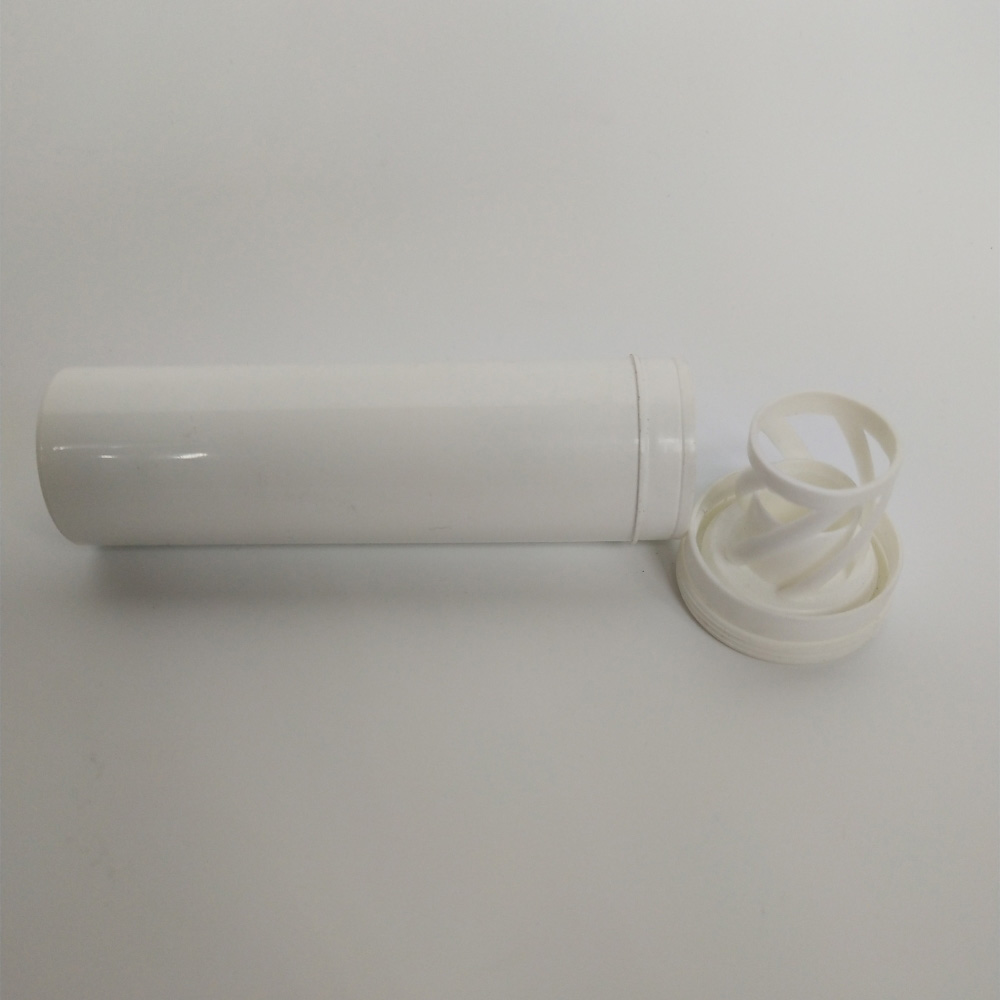
A bottle cap has two jobs: seal the bottle and open when needed. These two functions are in tension. A cap that seals perfectly but is impossible to open is useless. A cap that opens easily but leaks is equally useless.
The thread is the interface between cap and bottle. It provides the mechanical advantage to compress the seal. It determines how much force is required to open the cap. It affects how uniformly the seal is compressed.
Thread design directly impacts seal integrity. Poor thread design creates leak paths. Optimized thread design ensures reliable sealing while maintaining consumer-friendly opening torque.
At Shuanghao, we have developed thread design principles that balance sealing and openability. This article reveals the relationship between cap thread design and seal integrity.
Before discussing thread design, it is essential to understand how threads contribute to sealing.
The Mechanical Advantage
Threads convert rotational force (torque) into axial force (compression). When you turn the cap, the threads pull the cap down onto the bottle. This downward force compresses the sealing surface against the bottle rim.
The thread's lead angle determines how much axial force is generated per unit of torque. Steeper lead angles (fewer turns) generate less axial force per turn. Shallower lead angles (more turns) generate more axial force per turn.
Sealing Compression
The seal is created by compression between the cap and bottle. The compression must be sufficient to close any gaps. The compression must be uniform around the entire circumference. The compression must be maintained over time (no creep relaxation).
Thread design affects all three factors.
Several thread parameters affect sealing.
Thread Pitch
Pitch is the distance between adjacent threads. Finer pitch (smaller distance) means more turns to open. Coarser pitch (larger distance) means fewer turns to open.
For sealing, finer pitch generally provides more precise compression control. Finer pitch allows more turns to achieve the same compression, enabling finer adjustment. Finer pitch has less tendency to back off (loosen) under vibration.
However, finer pitch requires more turns to open, which may reduce consumer convenience.
Thread Lead
Lead is the axial distance the cap advances in one full turn. For single-start threads, lead equals pitch. For multi-start threads, lead = pitch × number of starts.
Lead affects opening convenience. Higher lead (fewer turns to open) improves convenience. However, higher lead reduces the mechanical advantage, potentially reducing sealing compression for the same torque.
Thread Angle
Thread angle is the included angle of the thread profile. Standard thread angles are 60 degrees (V-thread) or 0 degrees (buttress thread).
V-threads (60°) are the most common for caps. They provide good sealing and consistent torque. However, V-threads have lower axial force efficiency than buttress threads.
Buttress threads (0° angle on one side) provide higher axial force efficiency. They convert more torque into sealing compression. They are used for applications requiring high sealing force.
Thread Height
Thread height (depth) affects engagement between cap and bottle. Deeper threads provide more engagement area. More engagement area distributes stress over larger area. This reduces stress concentration and improves sealing consistency.
However, deeper threads increase ejection difficulty. They may increase opening torque.
Interference fit is the amount the cap thread overlaps the bottle thread.
What Is Interference?
Interference is the amount the cap thread is "too small" relative to the bottle thread. When the cap is screwed on, the interference creates friction. This friction generates the opening torque.
For sealing, interference serves a second purpose: it prevents the cap from backing off. The friction from interference keeps the cap tight.
How Much Interference?
Typical interference for PP caps is 0.10-0.20mm per side. Too little interference allows the cap to back off. Too much interference makes the cap difficult to open.
Interference must be balanced. Sealing requires adequate torque retention. Openability requires reasonable opening force.
Shuanghao calculates interference based on material creep properties, expected temperature range, and vibration during shipping.
Lead angle determines how much sealing compression is generated per unit of torque.
The Mechanics
Lead angle = arctan(lead / (π × pitch diameter)). Steeper lead angles (larger angle) mean more turns per axial distance. Shallower lead angles (smaller angle) mean fewer turns per axial distance.
For sealing, shallower lead angles provide more mechanical advantage. More mechanical advantage means more sealing compression for the same torque.
However, shallower lead angles require more turns to open, reducing convenience.
The Trade-Off
Shallower lead angles (more turns) improve sealing but reduce convenience. Steeper lead angles (fewer turns) improve convenience but may reduce sealing.
Shuanghao optimizes lead angle for each application based on sealing requirements and consumer expectations.
Thread profile affects how the thread engages with the bottle.
V-Thread vs. Buttress
V-threads have an included angle of 60 degrees. They are self-centering and provide consistent engagement. They distribute stress evenly across the thread flanks. They are the standard for most caps.
Buttress threads have one flank at 0 degrees (perpendicular to the cap axis). They provide higher axial force efficiency. They convert more torque into sealing compression. They are used for high-pressure applications (CO2 retention, hot-fill).
Shuanghao recommends V-threads for most applications and buttress threads for demanding sealing requirements.
Root Radius
Thread roots (the bottom of the thread) should have a radius. Sharp roots create stress concentration. Stress concentration can lead to cracking under compression.
Shuanghao designs thread roots with radii of 0.2-0.4mm.
The sealing surface and thread design must work together.
Sealing Surface Compression
The sealing surface must be compressed against the bottle. The compression is created by the threads pulling the cap down. More thread engagement (more turns) creates more compression.
Thread design determines the compression for a given torque. If threads cannot provide sufficient compression, the seal will leak.
Torque-Tension Relationship
The relationship between torque and axial tension (compression) is described by: T = K × F × D, where T is torque, K is the friction factor, F is axial force, and D is diameter.
Thread design affects K (friction factor) through lead angle and thread profile. Higher lead angle reduces K, requiring more torque for the same compression.
Good Thread Design
Good thread design provides consistent compression around the circumference. It maintains compression over time (minimal creep relaxation). It resists back-off from vibration or temperature cycling. It provides adequate torque for sealing without excessive opening force.
Poor Thread Design
Poor thread design causes non-uniform compression, creating leak paths. It allows back-off, reducing compression over time. It creates stress concentration, leading to cracking. It requires excessive torque for sealing, frustrating consumers.
Problem: Leakage Under Pressure
Cap leaks at pressure (e.g., carbonated beverages). Possible causes include insufficient thread engagement, lead angle too high (insufficient compression), too little interference (back-off), or thread profile not optimized.
Solutions include increasing thread engagement (more turns), reducing lead angle (more compression per turn), increasing interference (more friction), or switching to buttress profile.
Problem: Inconsistent Leakage
Some caps leak, others do not. Possible causes include cavity-to-cavity thread dimension variation, bottle thread variation, or assembly torque variation.
Solutions include verifying cavity thread dimensions, checking bottle thread consistency, or implementing torque monitoring during capping.
Problem: Torque Too High
Opening torque is excessive. Possible causes include too much interference, lead angle too low, or bottle threads damaged.
Solutions include reducing interference, increasing lead angle, or verifying bottle thread quality.
Problem: Torque Too Low
Opening torque is insufficient; caps may back off. Possible causes include too little interference, lead angle too high, or material creep.
Solutions include increasing interference, reducing lead angle, or using lower creep material.
Customer Case: Carbonated Beverage Cap
A carbonated beverage manufacturer needed caps that would retain CO2 for 12 months. Existing caps were losing pressure after 6 months due to insufficient seal compression.
Shuanghao redesigned threads with 25 percent more interference and optimized lead angle for maximum compression per turn. CO2 retention improved to 14 months. Opening torque remained within specification.
Customer Case: Hot-Fill Cap
A hot-fill manufacturer needed caps that would seal at 95°C without distorting. Threads had to pull the cap down firmly during hot-fill.
Shuanghao used buttress thread profile for maximum compression efficiency. Thread interference was increased to compensate for thermal expansion. The cap maintained seal integrity through hot-fill and cooling.
Shuanghao's thread design expertise provides optimized pitch, lead, and angle for each application. Proper interference balancing sealing and openability. Appropriate thread profile (V-thread or buttress) for sealing requirements. Root radii for stress reduction. Comprehensive analysis of torque-tension relationship. Sealing validation through leak testing and pressure retention.
Thread design is not just about holding the cap on. It is about creating the compression that makes the seal work. A well-designed thread provides consistent sealing compression, maintains compression over time, resists back-off, and opens with reasonable force.
Shuanghao's thread design principles balance all these factors to achieve reliable sealing without compromising consumer experience. Whether you need CO2 retention for carbonated beverages, hot-fill integrity for juices, or leak-proof sealing for chemicals, Shuanghao has the thread design expertise to deliver.
Choose Shuanghao. Choose threads that seal.